
Short answer: the City of Tulsa does not publish a single hardness number for all of its water, so be wary of anyone who quotes one. The one sourced figure in the metro comes from the City of Bixby, which says water from Tulsa’s A.B. Jewell treatment plant “runs 8.2 grains per gallon (gpg) or 140 parts per million (ppm).” On Tulsa’s own scale, that is “Hard.” Hard water does not make water unsafe, but the City says it raises water-heating costs and wears out heating elements faster, and the U.S. Department of Energy says scale can shorten the life of a tankless heater.
This guide explains Tulsa’s hardness scale, where that 8.2 gpg figure applies (and where it doesn’t), and what scale means for tank and tankless water heaters. It is general information, not an inspection of your home.
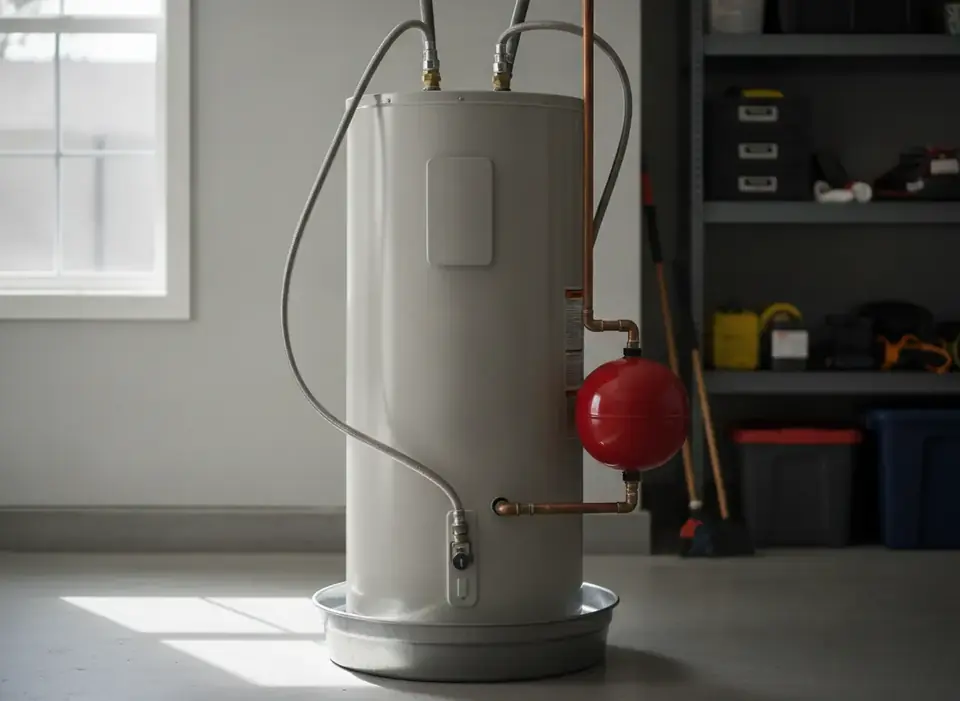
Tulsa’s hardness scale
The City’s water quality page explains hardness in grains per gallon. On that scale, 3.5 to 7.0 gpg is “Moderately Hard,” 7.0 to 10.5 gpg is “Hard” and anything over 10.5 gpg is “Very Hard.” In parts per million, the “Hard” band is 120 to 180 ppm. The page is also clear that “water hardness is not a safety issue.” Hardness comes from dissolved minerals, mainly calcium and magnesium, and it shows up as white crust on faucets, spots on glassware and scale inside anything that heats water.
The same page lists what hard water can cost you: scale on fixtures, clogged pipes, “increased water heating costs due to scale buildup” and more frequent replacement of hot water heating elements. That last point is the one Tulsa homeowners tend to feel first, usually as a heater that takes longer to recover or an electric unit that needs a new element sooner than expected.
Where the 8.2 gpg figure applies
Tulsa’s drinking water comes from Lake Oologah, Lakes Spavinaw and Eucha, and Lake Hudson, and it is treated at two plants. The City says the Mohawk plant usually serves north and west Tulsa, and the A.B. Jewell plant serves south and east Tulsa. Bixby buys its water from the Jewell plant, and its water FAQ is where the 8.2 gpg (140 ppm) average comes from.
So the figure is a reasonable guide for Jewell-plant areas: south and east Tulsa, Bixby and Jenks, which also buys its water from Tulsa. It is not a Tulsa-wide number. We found no published hardness figure for the Mohawk plant, so north and west Tulsa may differ.
Elsewhere in the metro the picture is different again:
- Owasso buys its water from Tulsa, although some Owasso addresses are served by Rogers County or Washington County rural water districts instead.
- Broken Arrow runs its own Verdigris River water treatment plant.
- Sand Springs and Sapulpa draw mainly from Skiatook Lake (Sand Springs also uses Shell Creek Lake; Sapulpa also uses Lake Sahoma).
We found no published hardness figures for Owasso, Broken Arrow, Sand Springs or Sapulpa. If you want a number for your address, ask your water provider or read its annual water quality report rather than relying on a figure from another city.
How scale affects a tank water heater
A tank heater holds and reheats the same water all day, so minerals have time to settle. Over the years that scale can collect at the bottom of the tank and on electric heating elements. The City’s list of hard-water effects lines up with what homeowners notice: higher water-heating costs and heating elements that need replacing more often.
The U.S. Department of Energy says storage (tank) water heaters last 10 to 15 years and that proper maintenance is key to reaching that range. Hard water is one reason a heater can land at the low end. Signs worth a call include rumbling or popping while the heater runs, hot water that runs out sooner than it used to, or an electric unit that keeps needing new elements.
Tankless heaters and scale: the DOE note
Tankless (on-demand) heaters heat water as it flows through a heat exchanger. DOE puts their life at about 20 years, longer than a tank, but its measure guide for tankless water heaters warns that scale “can restrict the flow of water through the heat exchanger and diminish the life of the unit.” In hard-water areas, that makes routine maintenance part of owning a tankless heater, not an optional extra.
If you are weighing a tankless unit in a Jewell-plant neighborhood, ask the plumber quoting it what maintenance the manufacturer calls for, how often they recommend it with water around 8.2 gpg, and what that service costs. Some homeowners also ask about a water softener. Whether one makes sense for your home is a question for the plumber or a water treatment specialist, and it should be priced as a separate line on the quote.
Repair or replace? Typical price ranges
These are typical ranges from published cost guides (2025–2026). They are estimates, not quotes, and they are national figures:
| Job | Typical range |
|---|---|
| Water heater repair | $150–$700 tank; $300–$1,300 tankless |
| Tank water heater replacement (40–50 gal) | $600–$3,100 installed |
| Tankless water heater, installed | $1,400–$5,600 |
| Service call / trip fee | $50–$200 (often includes the first hour) |
Permit fees and old-unit disposal are often billed separately. See the full Tulsa plumbing cost guide for more jobs, or read water heater repair or replace? if your unit is getting close to the DOE lifespan.
A water heater replacement in Tulsa is permitted work
The City of Tulsa’s plumbing permit form lists “water heater” as its own line item, so replacing one is permitted work in Tulsa, and the Permit Center says “Only a Licensed tradesperson may apply for trade permits.” In practice, that means the plumber you hire should pull the permit. Ask about it when you compare quotes. Our guide to plumbing permits in Tulsa covers the suburbs too. This is general information, not legal advice.
Before you hire
- Ask for the contractor’s Oklahoma plumbing contractor license number and look it up on the Construction Industries Board’s “Are They Licensed?” page.
- Ask whether they are registered with your city and whether they will pull the permit.
- Get the price in writing before work starts, including disposal, permit and any softener or descaling work.
Hard water questions
Is Tulsa water hard?
Tulsa does not publish a citywide hardness figure. The only sourced number is from Bixby’s water FAQ, which says Tulsa’s A.B. Jewell plant averages 8.2 grains per gallon (140 ppm), which falls in the “Hard” band of Tulsa’s own scale. That applies to Jewell-plant areas such as south and east Tulsa, Bixby and Jenks, not necessarily north and west Tulsa.
Is hard water safe to drink?
Yes. The City of Tulsa’s water quality page says plainly that “water hardness is not a safety issue.” Hardness is about dissolved minerals, mainly calcium and magnesium. The concerns are practical ones: scale on fixtures, clogged pipes, higher water-heating costs and heating elements that need replacing more often than they would with softer water.
How long does a water heater last in hard water?
The U.S. Department of Energy says tank water heaters last 10 to 15 years and tankless units about 20, with proper maintenance being key. DOE also notes that scale can restrict flow through a tankless heat exchanger and shorten its life. In hard-water areas, regular maintenance matters more, so ask the plumber what your model needs.
Get water heater quotes
Tulsa Plumbing Pros connects Tulsa-area homeowners with independent, licensed local plumbing contractors for free, no-obligation quotes. The plumber you choose quotes, pulls any permit, and does the work directly with you. Start with our water heater repair and replacement page, check for hidden leaks on the leak detection page, or request a free quote now.